

A temple in the home is a sacred space where people pray, meditate, and connect with God. In Indian culture, having a pooja place inside the house is very common. Many families start their day with prayer and end the day by lighting a diya in the temple. Because this space holds spiritual importance, it is very important to place it in the right area of the house.
According to traditional beliefs and ancient texts, Vastu Shastra gives useful guidance about how different spaces in the house should be arranged. One of the most important rules is choosing the correct direction for temple in home. When the temple is placed in the right direction, it is believed to attract positive energy and bring peace to the family.
This blog explains the best direction for temple in home according to Vastu Shastra and some simple rules that help maintain a peaceful prayer space.
Why Temple Direction is Important in Vastu?
Vastu Shastra is an ancient Indian science of architecture that focuses on balancing natural energies in a house. It suggests that every direction has a specific type of energy. When rooms and important areas are placed in the correct direction, the house can feel more balanced and peaceful.
The temple is the most sacred place in the home, so its direction matters a lot. A correct direction for temple in home can help create a calm environment for prayer and meditation.
According to Vastu experts, placing the temple correctly can help with:
Positive vibrations in the house
Peace and harmony in the family
Better focus during prayer
Spiritual growth and devotion
Because of these reasons, choosing the right location for the temple should always be done carefully.
North-East Direction for Temple in Home

The North-East direction, also known as the Ishan corner, is considered the best direction for temple in home according to Vastu Shastra.
This direction is believed to be the most sacred part of the house because it receives the first sunlight in the morning. Natural light entering this space creates a pure and positive atmosphere, which is perfect for prayer and meditation.
Many Vastu experts recommend that the pooja room or temple should always be placed in the North-East corner of the house whenever possible.
Benefits of placing the temple in the North-East direction include:
Calm and peaceful environment for worship
Better concentration during prayer
Natural sunlight entering the temple space
Positive spiritual energy in the home
For these reasons, the North-East corner is widely accepted as the most auspicious place for a temple.
East Direction for Temple Placement
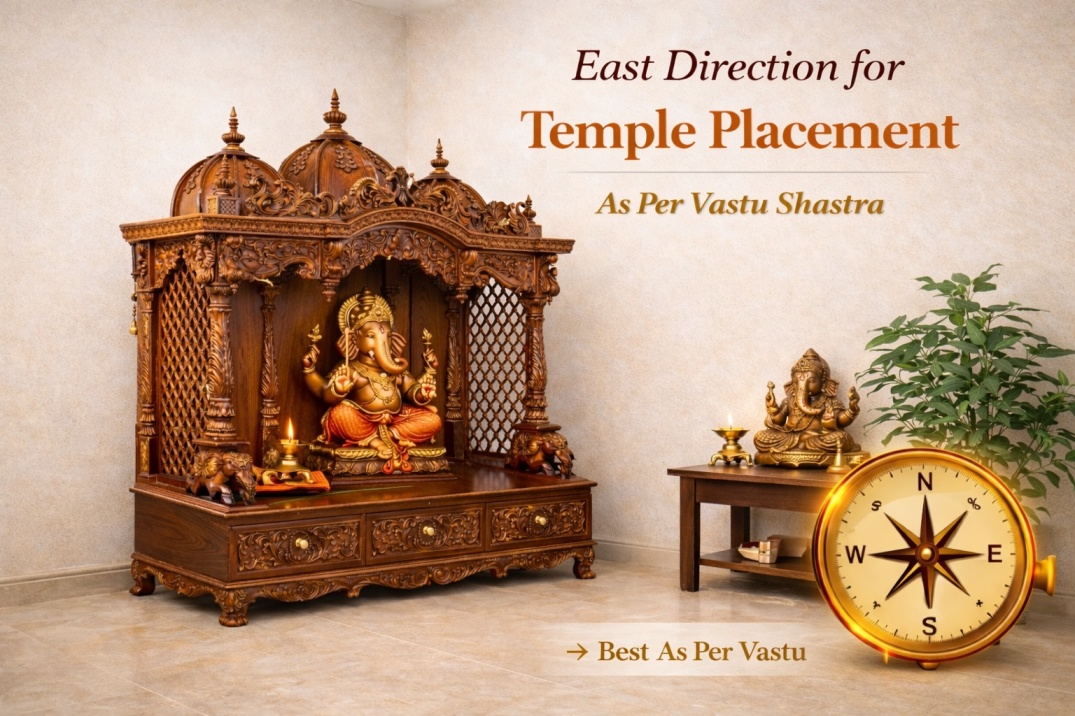
If the North-East corner is not available, the East direction is the next best direction for temple in home.
The East direction is associated with the rising sun, which symbolizes new beginnings, energy, and positivity. Placing the temple in this direction allows morning sunlight to reach the pooja space, which helps create a sacred environment.
When the temple is placed in the East direction, it is often suggested that the person praying should face East while offering prayers. This is believed to improve spiritual focus and devotion.
The East direction is therefore considered a very good alternative for temple placement.
North Direction for Temple Placement
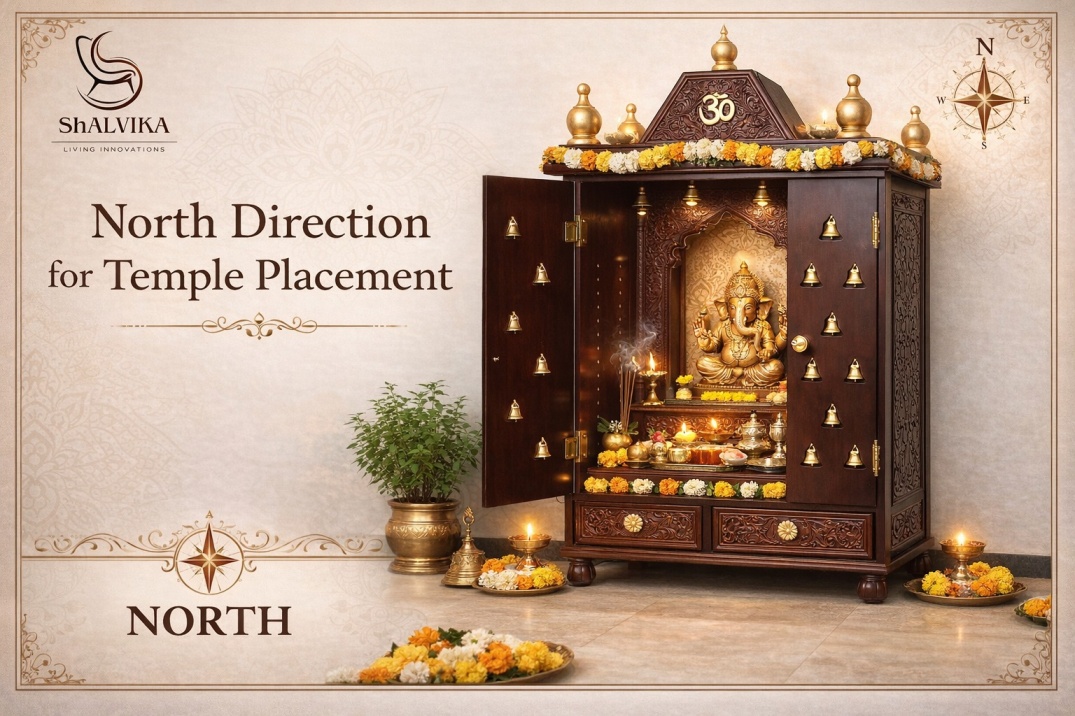
The North direction is another suitable direction for temple in home according to Vastu guidelines.
This direction is associated with prosperity, growth, and positive energy. Although it is not as ideal as the North-East direction, it is still considered a good place for the temple when other options are not available.
When the temple is placed in the North direction, it is usually recommended that the idols face South so that the person praying faces North.
This arrangement is believed to maintain the flow of positive energy in the home.
Directions to Avoid for Temple in Home
While some directions are considered auspicious, there are also certain places where the temple should not be placed.
South Direction
The South direction is usually not recommended for placing a temple. According to Vastu beliefs, this direction carries heavy energy that may not be suitable for spiritual activities.
South-West Direction
The South-West corner of the house should also be avoided for temple placement. This area is generally considered better for bedrooms or storage spaces rather than prayer areas.
Near Bathrooms
The temple should never share a wall with a bathroom or toilet. These spaces are considered impure according to traditional beliefs and may disturb the peaceful environment of the temple.
Under the Staircase
Placing a temple under the staircase is also not recommended. The temple should always be in a calm and open place where people can sit comfortably and pray.
Correct Direction for Idols in Temple
Apart from choosing the right direction for temple in home, the placement of idols inside the temple is also very important.
According to Vastu rules:
Idols should face East or West.
The person praying should face North or East while offering prayers.
Idols should not face South.
This arrangement helps maintain a balanced spiritual environment in the temple area.
Another important rule is that idols should not be placed directly on the floor. A proper platform or temple structure should always be used.
Ideal Location of Temple Inside the House
Apart from direction, the location of the temple inside the house should also be chosen carefully.
Some recommended locations include:
A dedicated pooja room
A quiet corner of the living room
A separate prayer space away from daily household activity
The temple area should always be calm and peaceful. It should not be located in noisy areas of the house.
If possible, avoid placing the temple inside bedrooms. However, if there is no other option, it can be placed in a clean corner of the bedroom while maintaining proper respect for the sacred space.
Height and Position of Temple
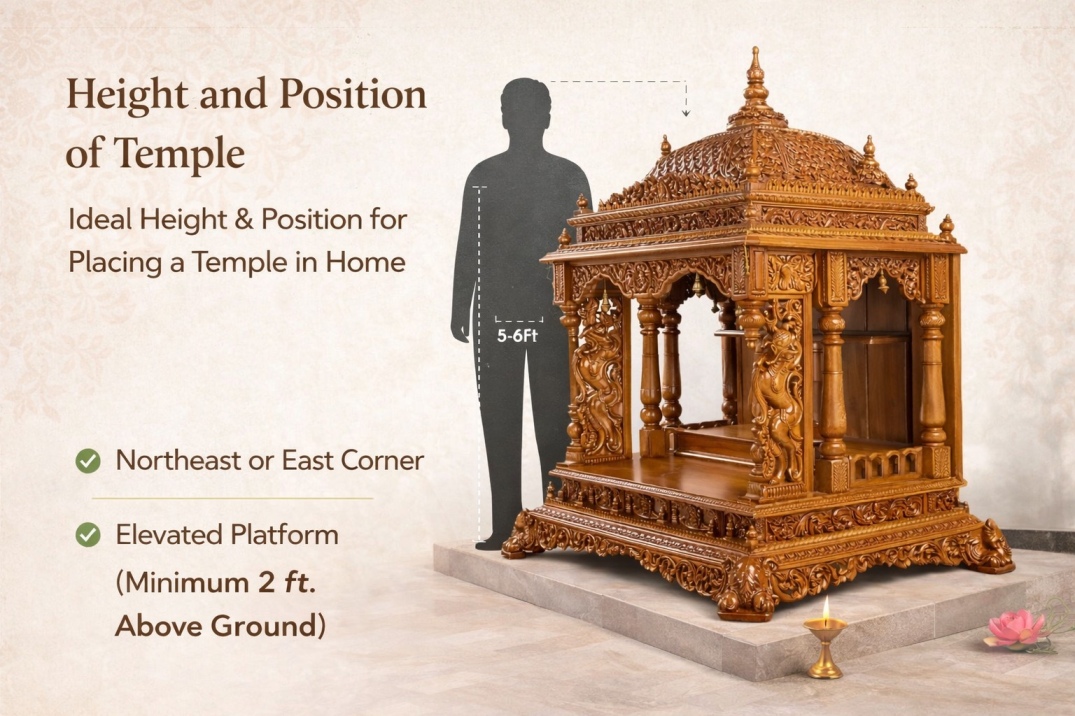
The height of the temple also matters according to Vastu guidelines.
Important tips include:
The temple should not be placed directly on the floor.
The idols should be at chest level when sitting for prayer.
The temple should not touch the ceiling directly.
Keeping the temple at a comfortable height makes it easier for family members to pray and maintain the sacred space properly.
Cleanliness of Temple Area
A temple must always be kept clean and organized. Cleanliness is considered an important part of spiritual practice.
Simple habits can help maintain the temple area:
Clean the temple regularly
Remove dried flowers daily
Keep prayer items arranged properly
Light a diya during prayer time
Avoid keeping unnecessary objects in the temple
A clean temple space helps maintain a peaceful and positive atmosphere in the home.
Importance of Natural Light and Air
Natural light plays an important role in a temple space. According to traditional beliefs, sunlight brings purity and positivity.
If possible, the temple should be placed where it can receive natural light during the morning. Fresh air circulation is also helpful for maintaining a pleasant environment in the prayer area.
A bright and well-ventilated temple space makes the experience of prayer more peaceful and meaningful.
Maintaining Peace in the Temple Area
The temple area should always remain calm and respectful. Loud noise, clutter, and unnecessary items should be avoided near the pooja space.
Family members should try to maintain silence and focus while praying. Many people also like to decorate the temple with flowers, diyas, and incense sticks to create a sacred atmosphere.
When the temple area is treated with respect and care, it naturally becomes a place of peace and devotion.
Conclusion
Choosing the correct direction for temple in home is very important according to Vastu Shastra. The North-East direction is considered the most auspicious location for a temple because it is connected with purity, sunlight, and spiritual energy. If the North-East corner is not available, the East or North direction can also be used. At the same time, directions such as South and South-West should generally be avoided.
Apart from direction, proper idol placement, temple height, cleanliness, and peaceful surroundings also play an important role in maintaining positive energy in the home.
When these simple Vastu guidelines are followed, the temple becomes a sacred space that brings peace, devotion, and harmony to the entire household.
Many homeowners today prefer beautifully carved handcrafted temples made from premium teak wood. At Shalvika Living Innovations we make home temples in premium quality teak wood. Our mandir’s combine traditional design, skilled craftsmanship, and customization options so that every home can have a temple that perfectly fits its space and spiritual needs.